
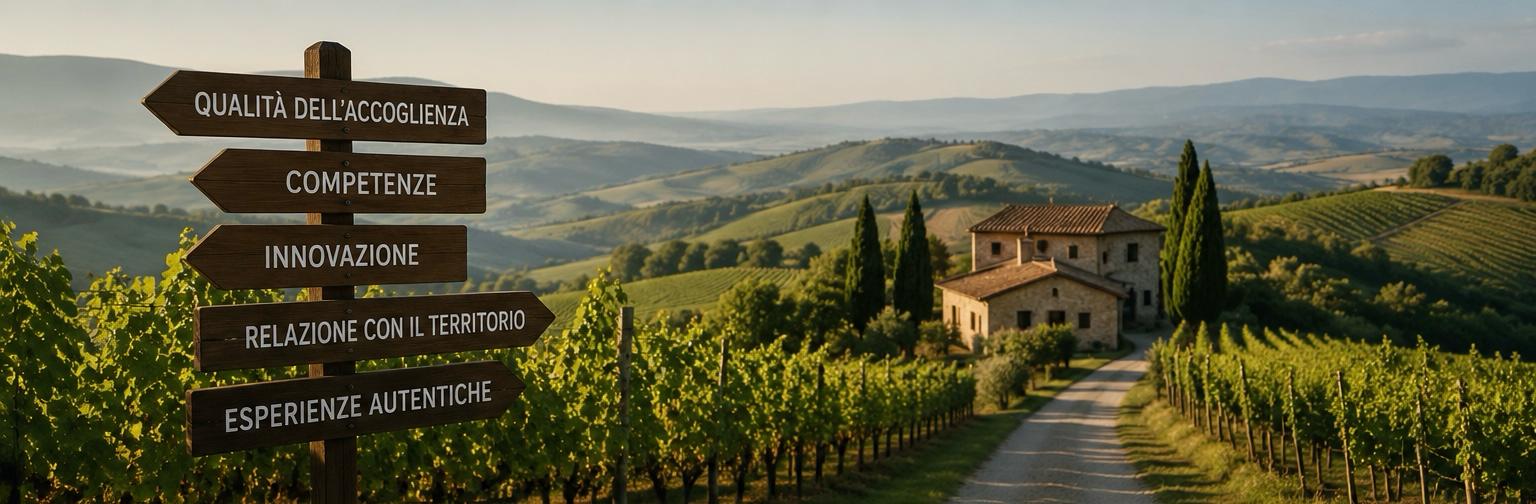
Italy continues to be one of the world’s leading destinations for wine tourism.
According to the latest figures, the sector now includes more than 20,000 wineries open to visitors and attracts over 20 million guests each year. Steady growth confirms the increasingly strategic role that wine tourism plays within Italy’s broader tourism offering.
This position of strength represents an extraordinary opportunity, but one that cannot be taken for granted.
This is the key message emerging from the recent publication Wine & Tourism. Theory and Practice of Wine Tourism at Wineries, presented at the Italian Senate by Dario Stefàno and Donatella Cinelli Colombini. Italy possesses a unique heritage made up of wine, landscapes, culture, gastronomy, and a strong sense of place. However, maintaining its leadership will require a continued commitment to innovation.
From Competitive Advantage to Responsibility
For many years, Italy’s cultural and scenic heritage has provided a natural competitive advantage. Today, however, that alone is no longer enough. The international market is becoming increasingly competitive, while visitors are more informed, discerning, and accustomed to comparing destinations.
Wine quality remains a fundamental prerequisite, but it is no longer sufficient on its own to guarantee the success of a wine tourism destination. What truly makes the difference is the ability to create experiences that are coherent, accessible, and memorable.

The New Skills Required in Wine Tourism
One of the key themes emerging from recent discussions is the importance of professional expertise.
Foreign languages, communication, hospitality management, marketing, event planning, and guest relations are becoming increasingly critical factors in the success of wine businesses.
Wine tourism can no longer be considered a side activity managed during spare moments of the day. It requires professionalism, well-defined processes, training, and a strategic vision. In other words, it calls for a managerial approach to hospitality.
From Individual Wineries to Wine Destinations
Another increasingly important aspect is the ability of destinations to work collectively.
Today’s visitors do not simply choose a wine tasting or a winery. They seek destinations capable of offering a complete experience that combines hospitality, gastronomy, culture, landscapes, and complementary activities.
In this context, collaboration among wineries, accommodation providers, tourism operators, and public institutions becomes a strategic factor in enhancing territorial competitiveness.Wine tourism generates value far beyond the boundaries of a single business, contributing to the economic and cultural development of local communities while strengthening the overall appeal of wine regions.
From Experience to Relationship
At the same time, visitor expectations are evolving.
Recent studies on food and wine tourism reveal a growing interest in authentic experiences, direct relationships with producers, and activities that allow travelers to gain a deeper understanding of a destination.
A winery visit is no longer simply about tasting wine; it is an opportunity to connect with a story, a community, a landscape, and a culture of production. This is why hospitality is becoming increasingly central: it serves as the meeting point between the value of a territory and the expectations of its guests.
Innovating Without Losing Authenticity
When people talk about innovation, technology often comes to mind. In reality, the challenge facing wine tourism is much broader.
It means making experiences easy to access and book, improving internal processes, building long-term relationships with guests, developing new skills, and fostering collaboration among wineries, tourism operators, and local destinations.
Above all, it means moving beyond the concept of a single visit toward an integrated vision of hospitality.
Italy possesses all the attributes needed to remain a benchmark destination for wine tourism. However, leadership cannot be maintained by default. It requires investment, training, professionalism, and the ability to anticipate and interpret market evolution.
At a time when demand for experiences continues to grow and visitors are increasingly attentive to the quality of hospitality, the competitive value of a destination will depend not only on the excellence of its wines or the beauty of its landscapes.
What will truly make the difference is the ability to transform a region’s cultural, agricultural, and human heritage into well-organized, accessible experiences capable of generating value for businesses, local communities, and the travelers who choose to discover them.
The real challenge in the years ahead will therefore be to develop hospitality models that are increasingly professional, integrated, and sustainable, ensuring that Italian wine regions continue to strengthen their competitiveness on the international stage.